
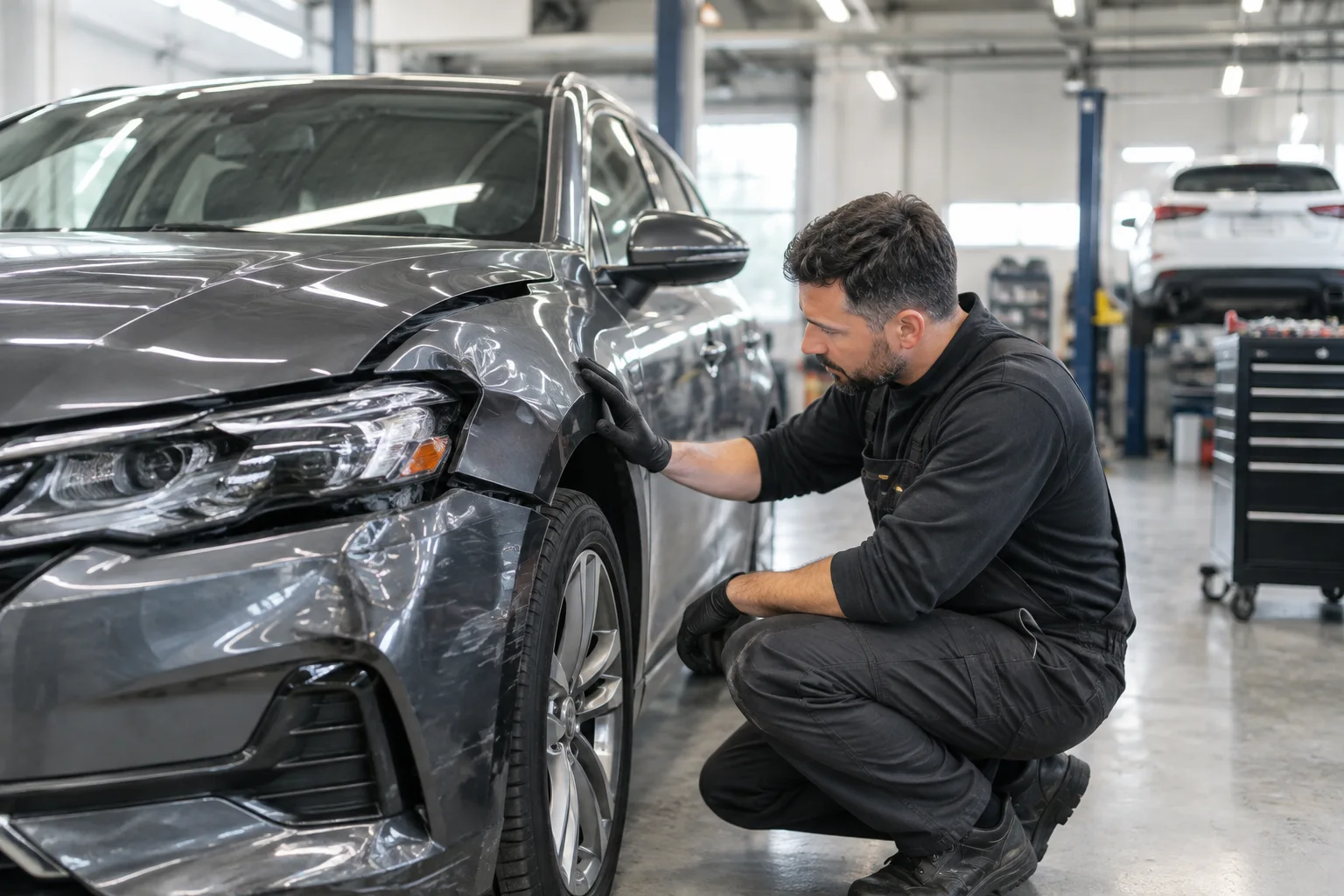
A detailed review of visible impact damage, affected panels, trim, lights, and surrounding exterior areas to help define the required repair work.
Assessment and repair planning for cracked, scuffed, dented, or displaced bumper covers and their related exterior components.
Repair of collision-related dents, creases, and deformation in body panels where repair is an appropriate option.
Removal and replacement of collision-damaged exterior panels when their condition, fit, or repair requirements call for replacement.
Adjustment of repaired or replaced exterior panels to support consistent gaps, secure attachment, and proper interaction with adjacent parts.
Preparation and refinishing of repaired collision areas to restore a uniform exterior appearance across the affected section.

A collision can leave more than a visible dent or cracked bumper. Even a low-speed impact may affect panels, mounting points, lights, trim, wheel-area components, or the way body panels fit together. A thorough inspection helps identify the damage that is immediately apparent and the areas that may need closer attention before repair work begins.
At TDB Auto, collision repair starts with an assessment of your vehicle’s condition and a discussion of the repair work required. Depending on the impact, repairs may involve damaged bumper covers, doors, fenders, hoods, quarter panels, paint finishes, or other exterior components. The appropriate approach depends on the location and extent of the damage, the condition of the affected parts, and how the repaired area needs to fit and finish with the rest of the vehicle.
For North Vancouver drivers, the goal is straightforward: address collision damage carefully, explain the work clearly, and return the vehicle with a clean, cohesive appearance. If your vehicle has been involved in an accident or has impact damage you are unsure about, arrange an assessment before small issues become harder to spot or manage.
Collision damage is not always limited to the point of impact. A bumper that looks lightly scuffed can have damaged retainers or nearby trim, while a dented door or fender may affect panel gaps, paint condition, or how neighbouring components sit. That is why collision repair in North Vancouver should begin with a careful inspection rather than a quick visual assumption.
After an accident, start by noting visible damage and arranging an assessment of the vehicle. During a collision repair review, the affected exterior areas can be examined for dents, cracks, scrapes, loose trim, shifted panels, damaged lights, and signs that parts are not sitting as they should. The repair plan will depend on the vehicle, the impact location, and the condition of each affected component.
Some panels can be repaired through bodywork and refinishing. In other cases, replacement is the more suitable path because of the damage location or condition of the part. The purpose of an assessment is to distinguish between those options and explain the work involved before repair decisions are made.
A clean result depends on more than making a dent less noticeable. Collision bodywork may involve preparing the affected surface, restoring the panel shape where practical, checking panel fitment, and refinishing the repaired area. On a vehicle with multiple damaged areas, the work needs to consider how the bumper, fender, door, hood, lamps, trim, and paint finish relate to one another.
For example, a front-corner impact may involve the bumper cover, fender edge, wheel-area trim, and headlamp area. A side impact can affect a door skin, mirror, moulding, and the alignment of adjacent panels. Looking at the full affected area supports a more complete repair conversation and helps avoid focusing only on the most obvious mark.
Whether a damaged part is repaired or replaced is a vehicle-specific decision. Material type, crack location, degree of deformation, attachment points, paint condition, and the condition of surrounding parts can all matter. TDB Auto can review the damage and discuss the available repair path in plain language.
North Vancouver driving can mean tight parking areas, busy bridges, changing weather, and frequent stop-and-go traffic. When a collision happens, prompt attention to damaged exterior components can help you understand the vehicle’s condition and make an informed plan. If you need auto body collision repair in North Vancouver, contact TDB Auto to arrange an assessment of your vehicle.
The vehicle is reviewed to identify visible damage and the exterior areas that need attention.
The required work, repair considerations, and any parts or refinishing needs are explained before work proceeds.
Damaged exterior components are repaired or replaced as appropriate, with attention to panel condition and fitment.
Affected repair areas are refinished as required, followed by a final review of the completed exterior work.
Collision damage varies by impact, vehicle, material, and affected components, so the work begins with an assessment of your actual repair needs.
Collision repair considers both the damaged part and how repaired or replaced panels, trim, and painted areas relate to surrounding components.
Understanding the difference between repair and replacement helps you make a more informed decision about the work on your vehicle.


