

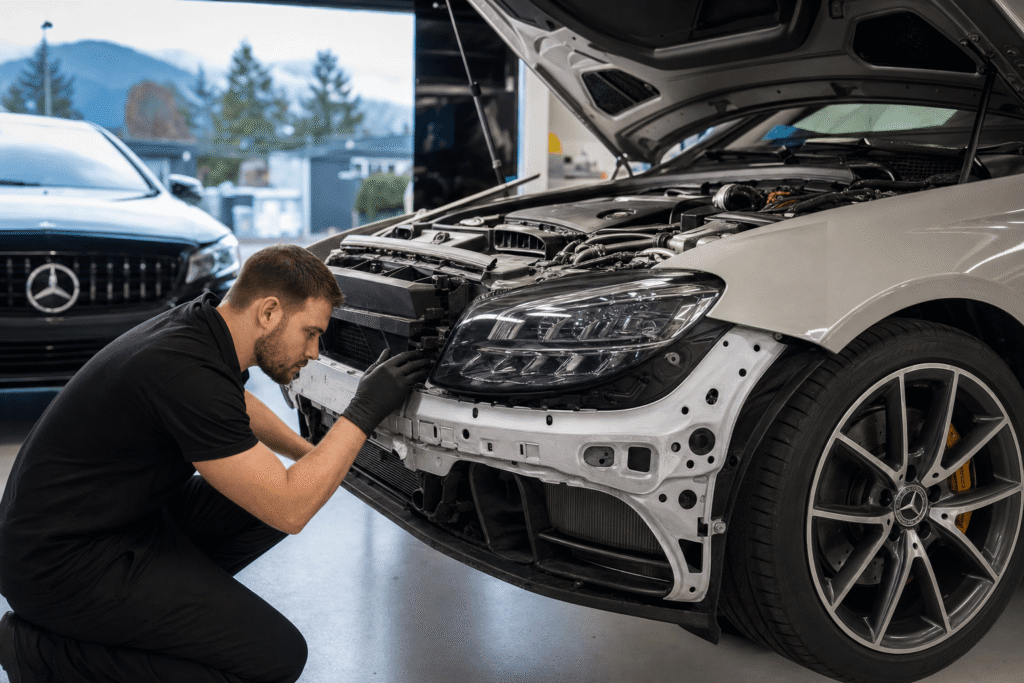
If you’ve been in a collision or noticed damage to your car, you might wonder whether to visit an auto body shop or a mechanic. The short answer: most auto body shops focus on cosmetic and structural collision repairs, not routine mechanical work like brake jobs or oil changes. But there’s a gray area where collision damage involves mechanical components, and understanding that overlap can save you time and money.
This article breaks down exactly what auto body shops do versus mechanical repair shops, when the lines blur, and how to choose the right facility for your specific repair needs.
Do Auto Body Shops Do Mechanical Repairs? The Direct Answer
Most auto body shops specialize in cosmetic and structural collision repairs, not routine mechanical work. However, many body shops handle collision-related mechanical repairs like suspension, steering, and axle damage when those components are damaged in an accident. They typically refer out engine diagnostics, transmission work, and routine maintenance to specialized mechanics.
Key Takeaways
- Body shops focus on collision damage, not routine maintenance
- Certified body shops handle collision-related suspension and steering repairs
- Choose a mechanic for engine, transmission, and routine service work
- Body shops refer out complex mechanical issues unrelated to collision damage
- One-stop shops cost 10-20% more but save time versus coordinating separate specialists
Auto Body Shops vs Auto Repair Shops: Understanding the Difference
The confusion between auto body shops and auto repair shops is understandable. Both work on vehicles and employ skilled technicians, but their specializations are fundamentally different.
Auto body shops focus on the exterior and structural integrity of your vehicle. They repair damage from collisions, weather, vandalism, or wear. Think dents, scratches, paint damage, frame alignment, and bumper replacement. These shops have specialized equipment like paint booths, frame straightening machines, and welding tools designed specifically for bodywork.
Auto repair shops (often called mechanics or auto service centers) handle the mechanical systems that make your car run. Engine diagnostics, brake repair, transmission service, oil changes, suspension tuning, and electrical system troubleshooting fall under their expertise.
The core difference: body shops restore your vehicle’s appearance and structural safety. Mechanics keep your vehicle running smoothly. At our collision repair services in North Vancouver, we see this distinction daily when clients arrive unsure whether their post-accident issues require bodywork, mechanical repair, or both.
What Auto Body Shops Specialize In
Auto body shops excel at restoring your vehicle’s exterior appearance and structural integrity. Their specialization centers on collision repair, but extends to various cosmetic and protective services.
Collision and Structural Repairs
Collision repair forms the foundation of most body shop work. After an accident, body shops assess and repair damage to panels, frames, bumpers, fenders, and doors. Frame alignment is critical, especially after significant impacts that compromise structural integrity.
Structural repairs involve more than surface fixes. Body shops use computerized measuring systems to ensure your vehicle’s frame returns to factory specifications. This matters for safety, handling, and long-term reliability. A misaligned frame affects everything from tire wear to airbag deployment.
Paintless dent repair for minor damage represents the cosmetic end of the spectrum. When a door ding or hail damage hasn’t cracked the paint, skilled technicians can massage the metal back to its original shape without repainting.
Paint Work and Refinishing
Modern vehicles use complex multi-layer paint systems with base coats, color coats, and clear coats. Matching factory paint involves analyzing the specific color code, accounting for fade over time, and blending new paint seamlessly with existing panels.
Body shops invest in climate-controlled paint booths that prevent dust contamination and ensure proper curing. Beyond collision repair, many body shops offer protective services like ceramic coating and paint protection film (PPF).
Need a free estimate in North Vancouver?
Nima and the TDB Auto team offer honest, expert auto body repairs for all makes including European and luxury vehicles. No pressure, no unnecessary claims.
The Gray Area: When Body Shops Handle Collision-Related Mechanical Repairs
Many modern auto body shops don’t just fix dented doors and scratched paint. They handle mechanical repairs directly related to collision damage.
When a collision damages suspension components, steering parts, or axles, the line between body shop and mechanic blurs. A front-end collision often damages control arms, tie rods, struts, and wheel bearings. A side impact can bend axles or damage suspension mounting points. These are mechanical components, but they’re damaged as part of a collision event.
Most certified collision centers employ technicians trained to diagnose and replace these collision-damaged mechanical parts. They have the diagnostic equipment to identify bent components, misaligned suspension geometry, and damaged steering systems. The work gets done in the same facility handling your bodywork, streamlining the repair process.
However, there’s a limit. Body shops handling collision-related mechanical work typically stick to components directly affected by impact damage. They’re not performing routine brake jobs, transmission rebuilds, or engine diagnostics unrelated to the accident.
How Body Shops Decide When to Refer Out Mechanical Work
Modern body shops use sophisticated diagnostic capabilities to determine what they can handle in-house versus what requires a mechanical specialist. When you bring your vehicle in after an accident, technicians perform comprehensive visual and computerized inspections to assess both obvious damage and hidden issues.
Body shops typically refer out mechanical work in several scenarios. If diagnostic scans reveal engine fault codes unrelated to the collision, you’ll be directed to a mechanic. Complex transmission issues, internal engine damage, or electrical system problems beyond collision sensors get referred to specialists with that specific expertise.
The referral decision often depends on equipment and training. A bent subframe might be repairable by the body shop, but if the impact damaged your engine mounts or transmission housing in ways requiring internal inspection, they’ll coordinate with a mechanical shop.
Quality body shops maintain relationships with trusted mechanics for seamless referrals. They coordinate estimates, timelines, and insurance claims so you’re not caught managing multiple facilities. This partnership approach ensures you get the right expertise for every aspect of your repair while keeping your vehicle repair on schedule and properly documented for insurance purposes.
After repairing collision damage, we recommend a post-repair alignment check. Even perfect bodywork can mask subtle suspension geometry issues that affect handling and tire wear down the road.
Services Auto Body Shops Do NOT Typically Provide
Understanding what body shops don’t do helps you avoid wasting time at the wrong facility. Here are the main service categories that fall outside typical body shop operations.
Engine repair and diagnostics: If your check engine light is on, your car won’t start, or you’re experiencing misfires, that’s mechanic territory. Body shops don’t typically have the specialized diagnostic equipment or training for internal engine work. Timing belt replacement, head gasket repairs, valve adjustments, and spark plug changes require engine-specific expertise.
Transmission service and repair: Whether you need a transmission fluid change, clutch replacement, or complete rebuild, you’ll need a transmission specialist or full-service mechanic. Body shops lack both the tools and training for this complex work, even when transmission housings sustain external collision damage.
Routine maintenance services: Oil changes, tire rotations, brake pad replacement, air filter changes, and scheduled maintenance intervals typically aren’t offered at body shops. These services require different workflow setups, parts inventory systems, and quick-service bay configurations than collision repair work.
Electrical and computer system diagnostics: Modern vehicles contain dozens of computer modules controlling everything from fuel injection to entertainment systems. Unless electrical damage stems directly from collision impact to specific sensors or wiring harnesses, body shops refer out electrical diagnostics. Complex issues like parasitic battery drains, faulty alternators, or starter problems require electrical specialists.
Air conditioning and HVAC systems: Unless your AC components were damaged in a collision, you’ll need a mechanic or AC specialist for refrigerant recharge, compressor replacement, or leak diagnosis. AC work requires EPA-certified technicians with refrigerant handling licenses and specialized recovery equipment that body shops don’t maintain.
When to Choose a Body Shop vs a Mechanic for Your Repair Needs
Making the right choice between a body shop and a mechanic starts with accurately identifying your vehicle’s problem.
Visible exterior damage, paint issues, dents, scratches, or structural concerns point to a body shop. If you’ve been in a collision, even a minor one, start with a body shop assessment.
Performance issues like strange noises, reduced power, handling problems, or warning lights typically indicate mechanical problems. If your car drives differently, makes unusual sounds, or displays dashboard warnings unrelated to a recent impact, see a mechanic first.
How to Identify If Your Issue Requires Body Work, Mechanical Repair, or Both
Post-accident scenarios often require both types of repair. A front-end collision might damage your bumper, hood, and radiator support (body shop work) while also affecting your radiator, cooling fans, and AC condenser (mechanical work).
Look for these signs you need body work: visible dents, scratches, paint damage, misaligned panels, doors that don’t close properly, or frame damage. Check for mechanical issues: fluid leaks, unusual noises when driving, vibrations, pulling to one side, dashboard warning lights, or reduced performance.
After any collision, have a body shop perform a complete inspection. They’ll identify both cosmetic and structural damage, plus collision-related mechanical issues. Their assessment will clarify whether all repairs can happen in-house or if mechanical specialists need to be involved. This comprehensive approach prevents overlooking hidden damage that could affect safety or lead to bigger problems later.
Questions to Ask When Choosing the Right Facility
Before committing to any repair facility, ask specific questions that reveal their capabilities and approach.
“Do you handle collision-related mechanical repairs, or do you refer those out?” This question clarifies whether the shop can complete your entire repair or if you’ll need to coordinate with multiple facilities.
“Can you provide a detailed written estimate before starting work?” Legitimate shops provide itemized estimates showing parts, labor, and expected timelines.
“Are your technicians certified for my vehicle make?” This matters especially for European and luxury vehicles. Mercedes, BMW, Audi, and Porsche require specific training and tools.
“How do you handle insurance claims and ICBC coordination?” If you’re filing a claim, you need a shop experienced with your insurance provider’s processes.
“What warranty do you offer on repairs?” Quality shops stand behind their work with written warranties covering both parts and labor.
“Will you identify all mechanical issues during your inspection?” This ensures they’ll catch collision-related mechanical damage early, preventing surprises mid-repair.
Cost Considerations: Specialist vs Full-Service Approach
Choosing between a body shop that handles everything in-house versus coordinating separate specialists affects both your total cost and repair timeline.
Body shops that perform collision-related mechanical repairs often charge competitive labor rates because they’re completing all work under one roof. You avoid duplicate diagnostic fees, multiple shop markups on parts, and the coordination headaches of moving your vehicle between facilities. This convenience often translates to faster turnaround times and simplified insurance claims.
However, specialist mechanics might offer lower hourly rates for purely mechanical work compared to a body shop’s mechanical labor rate. If your post-collision mechanical repairs are extensive and involve engine or transmission work, getting quotes from both your body shop and a dedicated mechanic helps identify the best value.
Insurance coverage complicates the equation. ICBC and private insurers typically cover collision-related mechanical damage as part of your claim. But if the adjuster questions whether mechanical damage resulted from the accident versus pre-existing wear, you might face disputes about what’s covered. Body shops experienced with insurance work can document damage properly to support your claim.
The one-stop-shop approach typically costs 10-20% more than coordinating separate specialists yourself, but saves significant time and hassle. For busy vehicle owners, that premium often proves worthwhile. For those willing to manage multiple estimates and appointments, using specialists for each component can reduce total expense. Out-of-pocket minor repairs like a small dent or bumper repair might run $300-$600 versus a $1000 deductible plus potential premium increases, making the body shop route more economical.
Frequently Asked Questions
Do auto body shops do mechanical repairs?
Most auto body shops focus on cosmetic and structural collision repairs rather than routine mechanical work. However, many certified body shops handle collision-related mechanical repairs like suspension components, steering parts, and axles when damaged in an accident. They typically don’t perform routine maintenance, engine repair, or transmission work unrelated to collision damage.
What is the difference between an auto body shop and an auto repair shop?
Auto body shops specialize in exterior and structural repairs including collision damage, dents, scratches, paint work, and frame alignment. Auto repair shops (mechanics) handle internal mechanical systems like engines, transmissions, brakes, and routine maintenance. Body shops restore appearance and structural integrity, while mechanics keep your vehicle running properly.
Can collision centers handle both body work and mechanical repairs?
Many certified collision centers can handle both bodywork and collision-related mechanical repairs. They employ technicians trained to diagnose and replace suspension, steering, and axle components damaged in accidents. However, they typically refer out complex engine, transmission, and electrical work unrelated to the collision event.
What services do auto body shops NOT provide?
Auto body shops typically don’t provide engine diagnostics and repair, transmission service, routine maintenance like oil changes, electrical system work unrelated to collisions, or air conditioning repair. These services require different specialized equipment and training than collision repair work.
Should I take my car to a body shop or a mechanic after an accident?
Start with a body shop after an accident. They’ll assess both cosmetic and structural damage and identify any collision-related mechanical issues. If mechanical damage is extensive or involves engine or transmission components, the body shop will coordinate with a mechanic or provide referrals to trusted specialists.
Making the Right Choice for Your Vehicle
Understanding the distinction between auto body shops and mechanical repair shops empowers you to make smart repair decisions. Body shops excel at collision repair, cosmetic restoration, and structural work. Mechanics handle the internal systems that keep your car running. The overlap occurs when collision damage affects mechanical components, and many quality body shops handle that gray area efficiently.
TDB Auto serves North Vancouver drivers with honest assessments, expert collision repair, and a 5.0 Google rating built on transparent service. Whether you’re dealing with a minor parking lot scrape or major accident damage, we’ll identify exactly what your vehicle needs and explain your options clearly.
Don’t guess about your repair needs. Visit us at 1468 Columbia St in North Vancouver or get a free estimate today. Nima and our certified team will assess your vehicle thoroughly and recommend the right repair approach for your specific situation, no pressure and no unnecessary claims.
