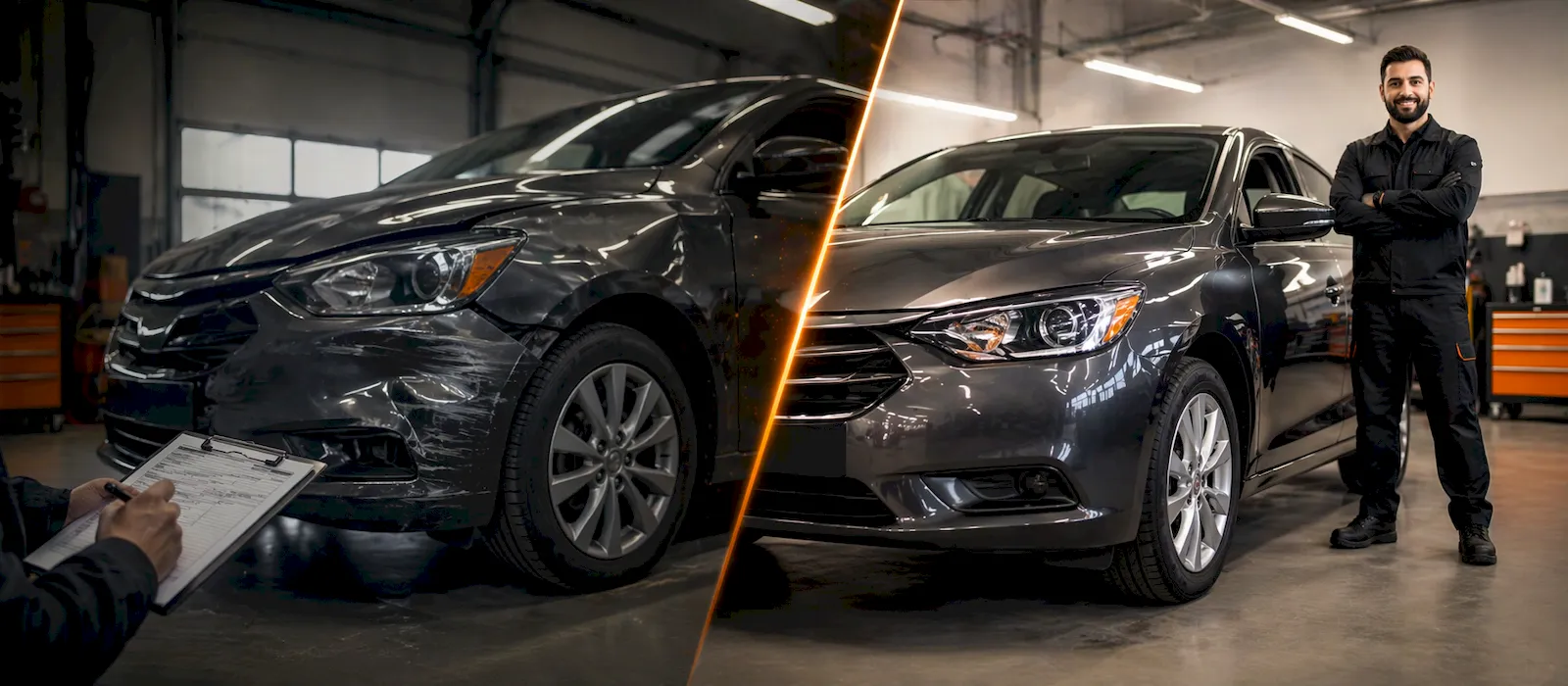
Paintless Dent Repair (PDR) is a modern technique for fixing car dents. It offers a cost-effective solution for car owners.
PDR is gaining popularity due to its efficiency and minimal environmental impact. It preserves the car’s original paint, maintaining its value.
This method is ideal for minor dents, dings, and hail damage. However, it may not work for severe damage or cracked paint.
The process involves using specialized tools to gently massage the metal back to its original form.
PDR is faster than traditional methods, often completed in a few hours. This makes it a convenient option for busy car owners.
The technique is less invasive, reducing the risk of further damage to the vehicle.
PDR is widely used by car dealerships, rental agencies, and auto body shops.
Understanding PDR can help car owners make informed decisions about dent removal and car dent fixing.
Understanding Paintless Dent Repair (PDR)
PDR stands for Paintless Dent Repair, a technique used for fixing minor dents. It avoids affecting the car’s original paint.
The process relies on skilled technicians who manipulate metal surfaces. Special tools help reshape the panels gently.

PDR is not new; it’s been in practice since the 1960s. Over time, the method has evolved with tools and techniques improving.
One primary reason car owners prefer PDR is its efficiency. It often costs less than traditional dent repair methods, saving money.
The method is particularly popular in regions with frequent hailstorms. It efficiently repairs hail damage without needing new paint.
PDR maintains the vehicle’s structural integrity. The original paint stays intact, which helps preserve resale value.
Key benefits of PDR include:
- Cost-effectiveness
- Time efficiency
- Environmentally friendly
- Preservation of original paint
- Suitability for minor dents
Many professionals in the auto industry now recommend PDR. This is due to its benefits and growing popularity among car owners.
Ultimately, knowing about paintless dent repair helps car owners choose effective ways to maintain their car’s appearance.
The History and Evolution of PDR
Paintless Dent Repair (PDR) began its journey in the automotive industry during the early 1960s. It originated as a straightforward method for fixing minor dents and imperfections on cars without the need for new paint.

PDR gained traction in Europe, primarily due to its efficiency in maintaining vehicle aesthetics. Over time, the technique evolved and spread across the globe, benefiting from technological advancements.
The evolution of PDR has been marked by improvements in tools and expertise. Modern tools are more precise, allowing technicians to repair a wider range of dent types effectively.
Today, PDR is a preferred method among car enthusiasts and professionals. It represents a commitment to both vehicle preservation and environmental consciousness by minimizing waste and conserving resources. As awareness grows, its popularity continues to increase, cementing its status as an essential service in auto body repair.
How Does Paintless Dent Repair Work?
Paintless Dent Repair (PDR) is a fascinating process that carefully restores a vehicle’s bodywork. This technique avoids any need for repainting. The magic of PDR lies in its gentle approach, which preserves the car’s original paint finish.
 by Wilhelm Gunkel (https://unsplash.com/@wilhelmgunkel)
Technicians begin the process by assessing the dent. They check its size, location, and depth to determine suitability for PDR. Once confirmed, they access the backside of the panel where the dent is located. This often involves removing interior panels or accessing through existing openings.
Using specialized tools, technicians meticulously massage and reshape the dent from the inside. The metal is worked back to its original position with gradual, gentle pressure. This process ensures no damage to the surrounding paint.
The repair can vary depending on the type of dent. Some may require more finesse and experience. Success in PDR hinges on various factors, notably the technician’s skill level and the tools used.
For intricate cases, technicians may utilize extra lighting and mirrors. These help to achieve precise alignments and seamless results.
The typical PDR process may be completed in just a few hours. In contrast, traditional methods often require days for curing and painting. Thus, PDR is known for its time efficiency and effectiveness.
By maintaining the original paint, PDR effectively preserves the car’s value. This approach ensures there are no mismatched colors or finishes. Moreover, the ease and speed of PDR save both time and money for car owners.
Overall, PDR offers a reliable and efficient means to address minor vehicle damages, all while maintaining its aesthetics and value.
 by Наталья Кленова (https://unsplash.com/@photo_tatti)
Tools and Techniques Used in PDR
Paintless Dent Repair requires a range of specialized tools. Each tool is crucial for different aspects of the dent removal process.
by Steve Lieman (https://unsplash.com/@stevelieman)
The foundational tools include metal rods and body picks. These are designed to reach inside panels and gently massage dents from the inside. Different rod shapes allow technicians to access difficult locations and apply precise pressure.
Light boards and reflection lights are essential for visibility. They help technicians identify even the smallest inconsistencies and improve repair accuracy.
Most dents require tapping and hammering for alignment. Soft-tipped hammers and knockdown tools allow minor corrections without harming the paint.
In certain cases, glue pulling might be employed for dents inaccessible from behind. This technique uses specialized glue and tabs that adhere temporarily to the paint, letting technicians pull the dent outwards.
The success of PDR rests on combining these tools with skilled techniques. Each tool can vary in shape and size, tailored for specific types of dents and vehicle panels.
Ultimately, the effectiveness of PDR depends heavily on the expertise and craftsmanship of the technician wielding these tools. A well-trained technician can transform a seemingly stubborn dent into a flawless panel, restoring the car’s pristine condition.
Types of Dents Suitable for PDR
Paintless Dent Repair is effective for a variety of dent types. However, not all dents can be addressed using this method. Understanding which dents are suitable is crucial for optimal results.
 by Ozkan Guner (https://unsplash.com/@dentistozkanguner)
Small to medium-sized dings are ideal candidates for PDR. These minor blemishes usually result from door bumps or shopping cart impacts. Their shallow nature makes them easy to massage out without paint damage.
Hail damage is another perfect candidate for paintless dent repair. Hail dents are typically small and uniform, allowing PDR techniques to restore the panel’s smoothness efficiently.
PDR can also handle certain types of creases or minor wrinkles. These require more skill but are possible, provided the paint remains intact and undamaged.
Suitable Dent Types:
- Small dings from parking mishaps
- Hail damage
- Minor creases and wrinkles
- Shallow dents with intact paint
It’s important to note that any dent with compromised or cracked paint may not be suitable for PDR. Sharp, deep dents or those near panel edges might require traditional methods due to their complexity. Always consult a professional for the best course of action.
Benefits of Paintless Dent Repair
Paintless Dent Repair offers numerous advantages over traditional methods. Its popularity is steadily increasing due to these benefits.
One of the primary benefits is cost-effectiveness. PDR generally costs less because it doesn’t involve painting or excessive labor. This makes it an attractive option for many car owners.
 y Jimmy Nilsson Masth (https://unsplash.com/@jimmynilssonmasth)
PDR is also time-efficient. Unlike traditional methods that can take days, PDR can often be completed within a few hours. This quick turnaround is perfect for busy schedules.
Maintaining your car’s original paint is another significant advantage. PDR preserves the factory finish, which helps maintain the vehicle’s value. This is particularly beneficial for luxury or classic cars where original paint is crucial.
The process is environmentally friendly. It avoids the use of chemicals, fillers, and paints, reducing harm to the environment. This makes PDR a greener choice for conscientious car owners.
Lastly, PDR is less invasive. It doesn’t compromise the structural integrity of your vehicle, ensuring safety and longevity.
Key Benefits of PDR:
- Cost-effective due to lower materials and labor
- Fast completion times, often within hours
- Preserves original paint and vehicle value
- Environmentally friendly with no chemicals or fillers
- Less invasive, maintaining structural integrity
By offering these benefits, PDR proves itself a superior choice for minor dents and dings. Consider these advantages when deciding on dent removal options.
PDR vs. Traditional Dent Repair Methods
Paintless Dent Repair (PDR) and traditional dent repair are two different approaches. Understanding their differences helps in making informed choices.
Traditional dent repair often involves sanding, filling, and repainting. This method can be time-consuming and expensive. The use of fillers and paint can affect your vehicle’s factory finish.
 by Ozkan Guner (https://unsplash.com/@dentistozkanguner)
In contrast, PDR focuses on gently removing dents without altering the original paint. This reduces the need for additional materials. It also preserves the vehicle’s original look, which is crucial for many car owners.
Traditional methods are more suitable for severe damage. This includes deep dents or scratches where paint is damaged. PDR is ideally suited for minor dents, dings, and hail damage.
The cost difference is also notable. Traditional methods typically involve higher costs due to labor and materials. PDR is more affordable because it requires fewer resources and less time.
When considering repair time, PDR is generally quicker. Traditional repairs can take several days, while PDR is often completed within hours. This makes PDR an appealing option for individuals with tight schedules.
Key Differences Between PDR and Traditional Repair:
- Materials Used: Traditional uses fillers/paint, PDR uses no materials.
- Time and Cost: Traditional is slower and costlier; PDR is faster and cheaper.
- Effect on Paint: Traditional may alter factory finish; PDR preserves it.
- Suitability: Traditional for severe damages; PDR for minor dents.
In summary, both methods have their merits. Your choice depends on the damage severity and personal preferences. PDR offers an efficient, cost-effective alternative for minor repairs.
The PDR Process: Step-by-Step
Paintless Dent Repair (PDR) is a meticulous process. Each step plays a crucial role in ensuring effective dent removal. Let’s explore how PDR unfolds from start to finish.
The first step involves a thorough inspection of the damaged area. Technicians assess the dent’s size, depth, and location. This evaluation determines if PDR is the right method for repair.
After inspection, technicians need to gain access to the back of the dent. This often means removing interior panels or components. Access is crucial for applying the precise techniques needed in PDR.
 by Kristine Wook (https://unsplash.com/@kwook)
Once access is secured, technicians utilize specialized tools. They gently massage and manipulate the metal. This step aims to restore the vehicle’s body back to its original shape.
A significant part of the process is patience. Technicians work methodically to ensure the dent is fully removed. Rushing could result in incomplete repairs or potential paint damage.
After the dent is fixed, a final inspection is carried out. This ensures the repair meets quality standards and the vehicle’s aesthetics are restored.
Key Steps in the PDR Process:
- Initial Assessment: Determine suitability of PDR.
- Gaining Access: Remove panels for tool access.
- Dent Removal: Use specialized tools and techniques.
- Final Inspection: Ensure quality and aesthetic restoration.
Following these steps ensures a successful and seamless PDR experience. Each phase requires attention to detail and precision, resulting in a smooth, dent-free finish.
Factors Affecting PDR Success
The success of Paintless Dent Repair hinges on various factors. Each one plays a crucial role in the outcome of the repair process. Identifying these factors early can guide both technicians and vehicle owners.
One key factor is the size and depth of the dent. Larger or deeper dents might pose challenges. Slight dents are usually more amenable to PDR methods.
The location of the dent also impacts repair success. Dents on edges or near seams are typically harder to repair. Smooth, central areas of panels respond better to PDR techniques.
Critical Factors Influencing PDR Outcomes:
- Dent Size and Depth
- Dent Location on Vehicle
- Metal Type and Thickness
The condition of the vehicle’s paint is another consideration. High-quality, intact paint enables better PDR results. Paint cracks or chips may complicate the process, affecting success rates.
Cost of Paintless Dent Repair
Paintless Dent Repair offers a cost-effective solution for car dent fixing. Compared to traditional repair methods, PDR typically requires less time and fewer materials. This efficiency often translates to lower expenses for vehicle owners.
The exact cost can vary based on several factors. The size and depth of the dent play a significant role. More complex repairs might incur higher charges. However, minor dents are usually less expensive to fix.
Factors Influencing PDR Pricing:
- Dent Size and Complexity
- Vehicle Make and Model
- Technician’s Expertise and Location
Despite these variables, PDR remains an affordable choice for dent removal. It’s a widely accessible option offered by many auto body shops. For a precise estimate, consulting a professional technician is advisable. This can ensure clarity on potential costs and desired outcomes.
 by Dithira Hettiarachchi (https://unsplash.com/@dithirah)
DIY PDR: Is It Worth Trying?
Many car owners consider DIY PDR for its potential cost savings. With readily available kits, it’s tempting to tackle minor dents yourself. However, the success of DIY paintless dent repair can vary greatly.
While small dents may seem manageable, PDR requires skill and patience. Without proper technique, you might inadvertently cause more damage. Incorrect pressure can result in paint cracking or metal stretching.
Considerations for DIY PDR:
- Size and Location of Dents
- Access to Appropriate Tools
- Personal Skill Level
Before attempting a DIY solution, evaluate these aspects carefully. If unsure, consulting a professional can prevent costly mistakes. While DIY has its appeal, investing in expert help often ensures better results.
Choosing a Professional PDR Technician
Finding the right PDR technician involves careful consideration of experience and credentials. A skilled technician can make a significant difference in the quality of the repair. Look for someone with a proven track record and satisfied clients.
Start by checking reviews and asking for recommendations from friends or online forums. This can provide insight into the technician’s reliability and expertise. A local expert often understands the common types of damage in your area.
Qualities to Look For:
- Certification and Training
- Experience with Various Vehicles
- Customer Reviews
When contacting potential technicians, inquire about their approach and tools. A good professional will explain the process clearly and ensure you are comfortable with the plan. Trust and open communication are essential for a successful repair experience.
 by Rendy Novantino (https://unsplash.com/@novantino)
Frequently Asked Questions About PDR
Many car owners have questions about Paintless Dent Repair. Here, we’ll address some common inquiries to help clear up any confusion.
One frequent question is whether PDR can handle all dent types. PDR works best for minor dents without paint damage. Severe dents might require other repair methods.
Another concern is the repair duration. PDR is quick; small dents can be repaired in just a few hours. However, the time required may vary depending on the dent’s size and location.
Insurance coverage is another common question. Most insurance policies cover PDR, particularly for hail damage. It’s advisable to check with your provider for specific details.
Common Questions About PDR
- Can it repair all dents?
- How long does it take?
- Is it covered by insurance?
- Does it affect the car’s paint?
PDR doesn’t harm the car’s paint, preserving its original finish. For more serious questions or concerns, consulting a professional technician is recommended. They can offer personalized advice based on the specific condition of your vehicle.
Paintless Dent Repair and Insurance
Paintless Dent Repair often raises questions about insurance coverage. Luckily, PDR is usually covered by many auto insurance policies. This makes it an appealing option for those with coverage, especially in areas prone to hail damage.
It’s essential to confirm the details with your insurance provider. Policies can differ significantly between companies. Ensure you understand what is covered and what isn’t. This will help avoid unexpected costs.
Key Insurance Considerations
- Check policy details for PDR coverage.
- Inquire about coverage for hail damage.
- Clarify any out-of-pocket expenses.
Discussing these aspects with your provider is beneficial. This ensures you are prepared and can plan accordingly for any needed repairs.
Environmental Impact of PDR
Paintless Dent Repair is considered eco-friendly. Unlike traditional methods, it doesn’t require paints or harsh chemicals. This reduces pollution and waste. Thus, PDR leaves a smaller carbon footprint.
Moreover, PDR conserves resources by preserving the vehicle’s original components. This makes it a sustainable choice for environmentally conscious car owners. It’s a method that aligns well with eco-friendly practices.
 by Dylan McLeod (https://unsplash.com/@son_of_media)
Conclusion: Is PDR Right for Your Car?
Paintless Dent Repair offers an efficient way to fix minor dents. It’s cost-effective, quick, and eco-friendly. If your car has minor dings or hail damage, consider PDR.
Evaluate your car’s damage type and location before deciding. PDR works best for small, shallow dents without paint cracks. Consult a professional to ensure the method suits your needs. Making the right choice can preserve your car’s value and appearance.